Once the city’s fish market and port, it has kept the bones of that past, the long rectangular square where the market basin used to be, the names of the streets, the seafood restaurants that have been on the same corners for generations, while becoming, gradually and without much announcement, one of the best places to eat, drink and spend time in Brussels.
The History You Can Still See
The square itself is the place to start. Place Sainte-Catherine was the head of the fish market for nearly a century, and the long rectangular basin that once brought North Sea fish into the heart of Brussels is now a pedestrian square, flanked by restaurant terraces on both sides. The Church of Saint Catherine, a composite of Gothic and Baroque elements that took several centuries to complete, anchors one end of the square. Just around the corner, the Tour Noire: a fragment of the 13th-century city wall, preserved between two buildings, that most people walk past without noticing.
The neighbourhood carries its history lightly. It does not present itself as a museum. The medieval tower and the natural wine bar occupy the same block. That coexistence is what makes it interesting.
The Fish Market That Never Really Left
The fish market closed in the 1950s. The restaurants stayed. Today, within a hundred metres of the square, there are more serious seafood addresses than almost anywhere else in the city, including La Belle Maraîchère, an old-school institution that has been serving the best of Brussels fish cooking to locals, tourists and foodies in equal measure for decades, and Le Vismet, where chef Tom Decroos works in an open kitchen with a view over a room that manages to feel both stylish and relaxed.
The one that most people remember is Noordzee, La Mer du Nord. The concept is deliberately simple: order at the counter, take your plate across the street, find somewhere to stand. Shrimp croquettes, fish soup, whatever is fresh that day. On a sunny afternoon, the high tables outside fill with a mix of office workers, tourists and regulars who have been coming here since long before it became well known. It is, by most measures, the defining Sainte-Catherine experience.
Rue de Flandre — The Street That Changed
Running north from the square toward the canal, Rue de Flandre has become one of those streets that accumulates a certain kind of energy, independent shops, specialty coffee roasters, restaurants that take their sourcing seriously, bars that stay open late without feeling like they are trying too hard. Time Out named it one of the coolest streets in the world in 2025. The designation is accurate, if slightly beside the point. The street works because it has genuine variety on a walkable scale, not because anyone designed it that way.
MOK Coffee, one of the city’s most respected specialty roasters, has its Brussels flagship here, a spare, precise space that reflects the same ethos as the coffee. Further along, the Brasserie Surréaliste occupies an Art Deco building with a brewery inside, which is not a combination that exists in many places. On Sunday evenings, the café Roskam runs live jazz. The street rewards walking slowly.
Fin de Siècle — and the Rue des Chartreux
One street over, Rue des Chartreux is where the neighbourhood keeps its most enduring institution. Fin de Siècle has been serving traditional Brussels cooking, carbonnade flamande, stoemp, everything written on a blackboard, nothing translated, at communal tables for longer than most of its current regulars have been alive. No reservations, portions that err on the generous side, a room that fills fast. Go before seven or be prepared to wait.
On the same street, 9 et Voisins has been open in some form since 1918. The combination of the two makes Rue des Chartreux a useful point of reference for anyone trying to understand what Brussels actually eats when it is not performing for visitors.
The Quarter After Dark
The neighbourhood transitions well into the evening. The terraces around the square stay occupied as long as the weather allows. The Halles Saint-Géry, a 19th-century covered market that has become a bar and cultural space, sits just south of the square and draws a crowd most nights. The Archiduc, an Art Deco jazz bar a few minutes’ walk away, has been doing the same thing since 1933, which means it predates most of the things that claim to be institutions in this city.
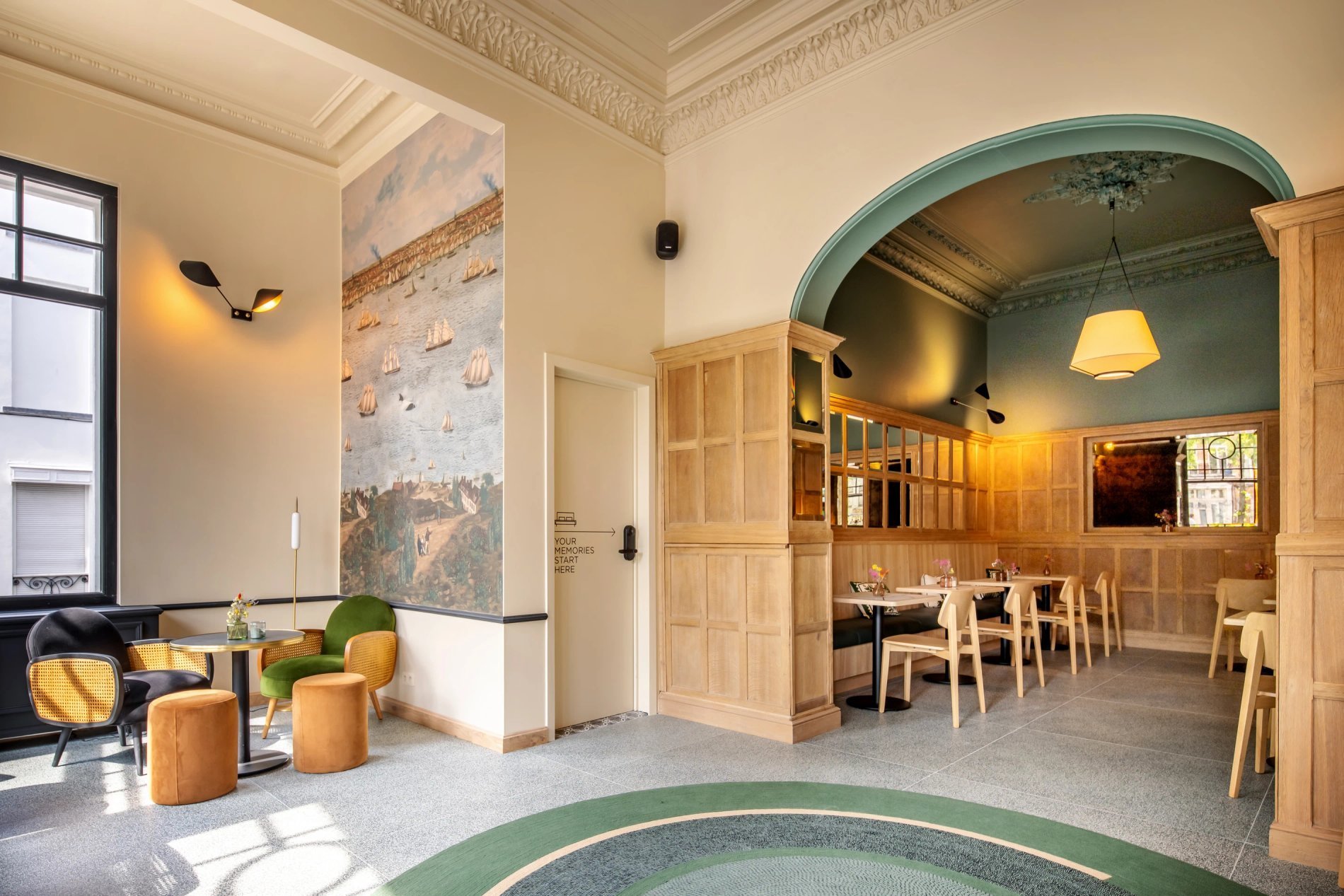
The Brussels Beer Project, further along the canal, is the place to go if you want to understand what Belgian craft brewing looks like when it is paying attention to the present rather than the past. The bar at Made in Catherine, on the Quai aux Bois à Brûler, where the hotel sits, is part of the same evening landscape: specialty coffee until the afternoon shifts to something colder, and a selection of Belgian craft beers, cocktails and a 0% list that holds its own in a neighbourhood that takes drinking seriously.
The Béguinage — the Part Most People Miss
A short walk from the square, the Église du Béguinage is one of the finest Baroque buildings in Belgium and one of the least visited. It was built for a community of beguines, laywomen who chose a religious life without taking formal vows, and completed in 1676. The interior is calm and extraordinary. Most people walk past the entrance without going in.
The Béguinage is worth the detour precisely because it is not on most itineraries. It sits at the edge of the neighbourhood, past the point where most visitors turn back toward the Grand-Place, and finding it feels like finding something that has not been curated for you.
Getting Here — and Staying
Sainte-Catherine is served by the metro station of the same name, one stop from De Brouckère and two from the city centre. On foot from the Grand-Place, the walk takes around ten minutes through the pedestrian streets of the old town.
Made in Catherine is on the Quai aux Bois à Brûler, on the south side of the square, facing the canal. The hotel is in the neighbourhood, not adjacent to it, which is a different thing, and worth knowing when you are choosing where to stay.
For what is on in Brussels this summer, the events guide is here. For the bar and its summer menu, more on what is on the counter.